E-commerce platform, B2C and B2B, 2026
Sonic
A store built for a catalogue that does not fit a template
A bilingual e-commerce platform for a home-cinema and acoustics distributor: custom faceted filtering over 152 attributes, ten hand-coded scroll-driven brand pages, and pricing rules for dealers, fabric by the metre and build-it-yourself kits.
- 186
- products in each language
- 152
- product attributes, every one filterable
- 10
- hand-coded brand pages, each in two languages
- 52
- categories, up to four levels deep
- 0.3 s
- time to first byte on cached pages
Problem
One catalogue, from a ₪0.058 screw to a ₪164,400 speaker
Sonic distributes home-cinema equipment and acoustic materials in Israel. The catalogue is unusually wide. A flagship loudspeaker and a drywall screw sit in the same store, next to acoustic fabric sold by the running metre and soundproofing kits sized to a customer's room.
Two audiences buy from it. Home owners need to be convinced that a brand is worth the price. Dealers and installers already know the brands and want their own prices, quickly, in Hebrew or English.
A standard WooCommerce theme handles none of that well. The work was to design a store around how these products are actually chosen and sold, then build the parts that did not exist.
- Buyers
- Home owners, dealers, installers
- Languages
- English and Hebrew, fully mirrored
- Catalogue
- 108 variable products, 67 simple, 11 bundles
Brand pages
Brand pages that sell before the price appears
Ten brands have their own landing page, each with its own template, stylesheet and scroll script. They are written by hand in the theme and are not page-builder layouts, because the story of each brand needed its own pacing.
A shared engine sits underneath: pinned scenes, image sequences drawn to canvas and scrubbed by the scroll position, and text that fills in word by word. Video is served from a CDN with separate mobile encodes.
- Pinned scroll scenes with GSAP ScrollTrigger
- Canvas frame sequences, loaded only when they approach the viewport
- A calmer version for visitors who prefer reduced motion
- Fixes for the in-app browsers of Facebook and Instagram, where most ad traffic lands
Filtering
Filters that build themselves
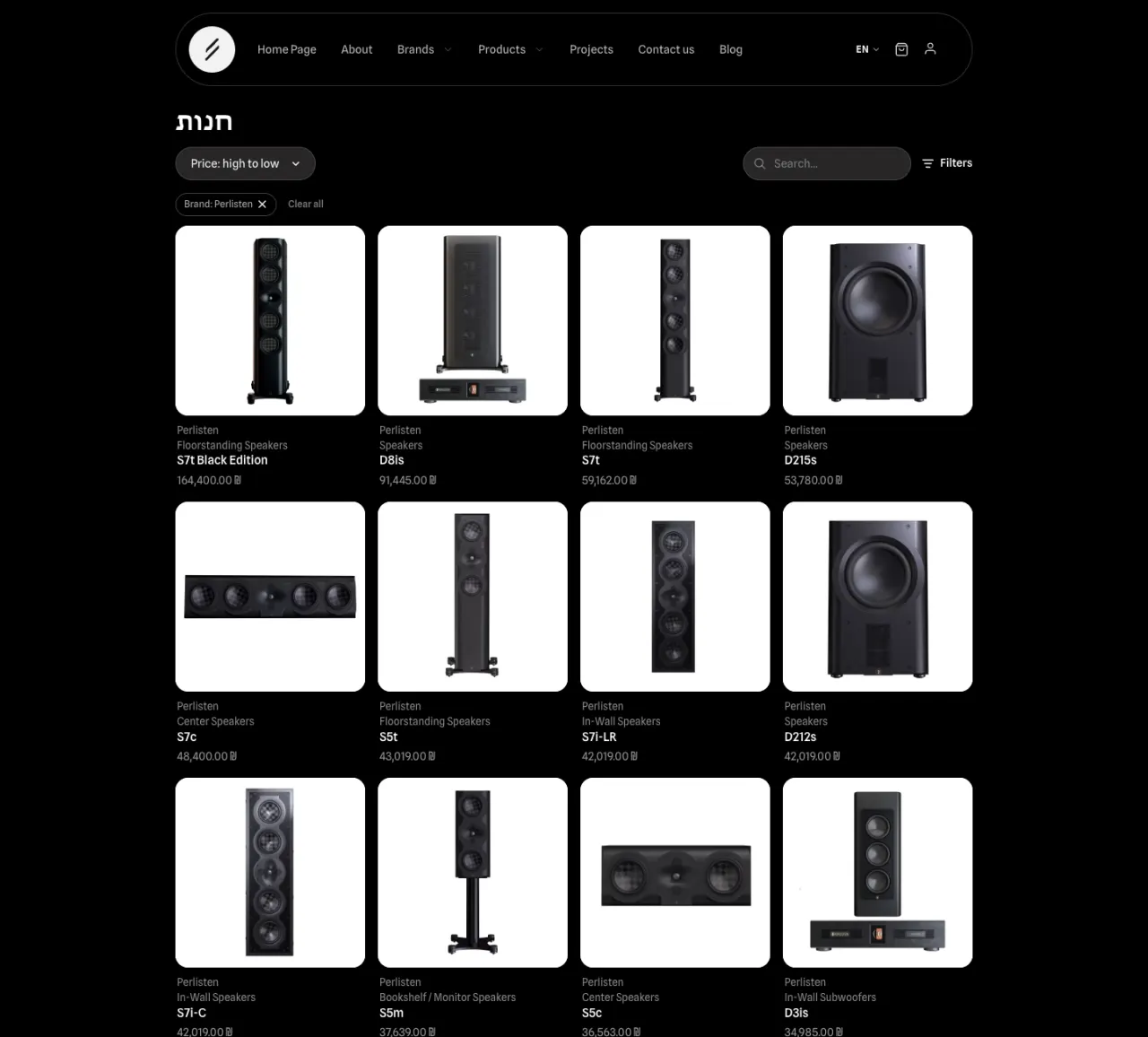
The filter panel is generated from the catalogue. Every one of the 152 attributes becomes a facet automatically, with colour and image swatches where they exist and a search box inside the longer lists.
It is aware of where it is. On the Perlisten brand archive it shows 17 relevant groups instead of about 150, hides the brand filter, and counts only that brand's 48 products.
- Live counts next to every option, and empty options disappear
- One request updates products, filters, chips, pagination and the result count
- Every filter state is a shareable URL that works with the back button
- Results are cached per language and per customer role, so dealers see dealer prices
Selling modes
Five ways to sell, in one product page
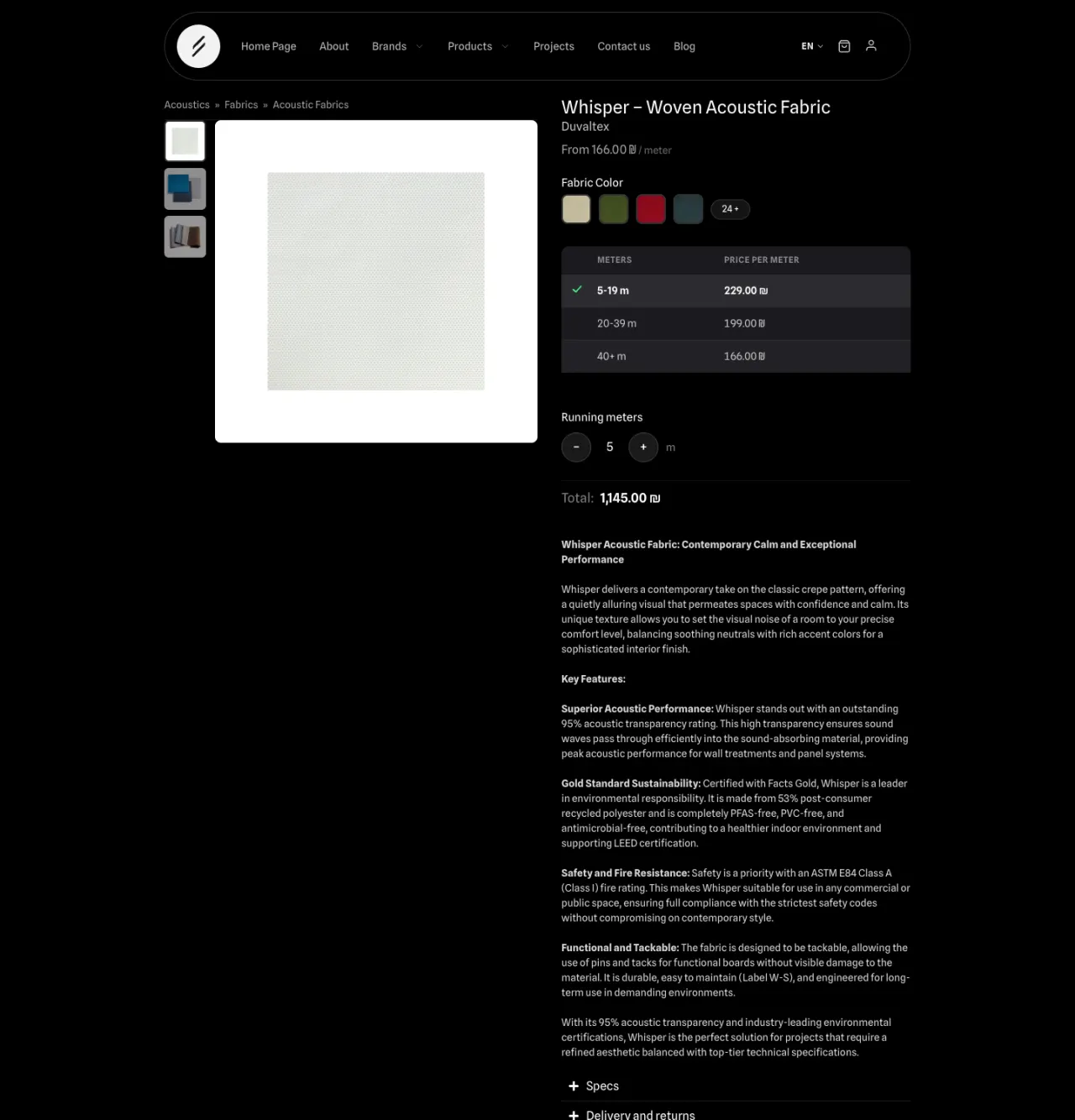
A quantity field and an add-to-cart button do not describe how these products are bought. The product page changes its behaviour to match the product.
- Fabric by the running metre: tiered prices at 5, 20 and 40 metres, with a live total
- A build-it-yourself configurator: enter the room size, pick a colour, and quantities are calculated
- Catalogue mode for made-to-order items: a starting price and a contact button
- Kits priced per square metre
- A quantity slider for items priced in fractions of a shekel
Decisions
Four decisions and what they cost
Write the filter instead of installing one
- Problem
- With 152 attributes, a generic filter plugin shows every group on every page and counts them on every request.
- Decision
- Build a purpose-made filter with context-aware facets and its own cache.
- Outcome
- About 2,500 lines of code to own and maintain, in exchange for a panel that shows only what is relevant.
Hand-code the brand pages
- Problem
- Page builders are fast to edit and slow to scroll. Pinned scenes and canvas sequences need exact control of the page.
- Decision
- Each brand page is a template in the theme, on top of a shared scroll engine.
- Outcome
- The client cannot edit these pages alone. They change rarely, so the trade was worth it.
One store for consumers and dealers
- Problem
- A separate dealer portal means two catalogues to keep in sync.
- Decision
- Dealers log in to the same store and see their own prices everywhere, including tiered fabric prices. The cart reprices itself the moment a guest signs in as a dealer.
- Outcome
- Every cache had to become role-aware, which is why product cards are cached per language and per role.
English as the source of truth
- Problem
- Prices and stock entered twice will drift apart.
- Decision
- Products are managed in English. Hebrew translations inherit price and stock automatically.
- Outcome
- One place to change a price, and custom sync code to maintain.
Mobile
Designed for the phone first
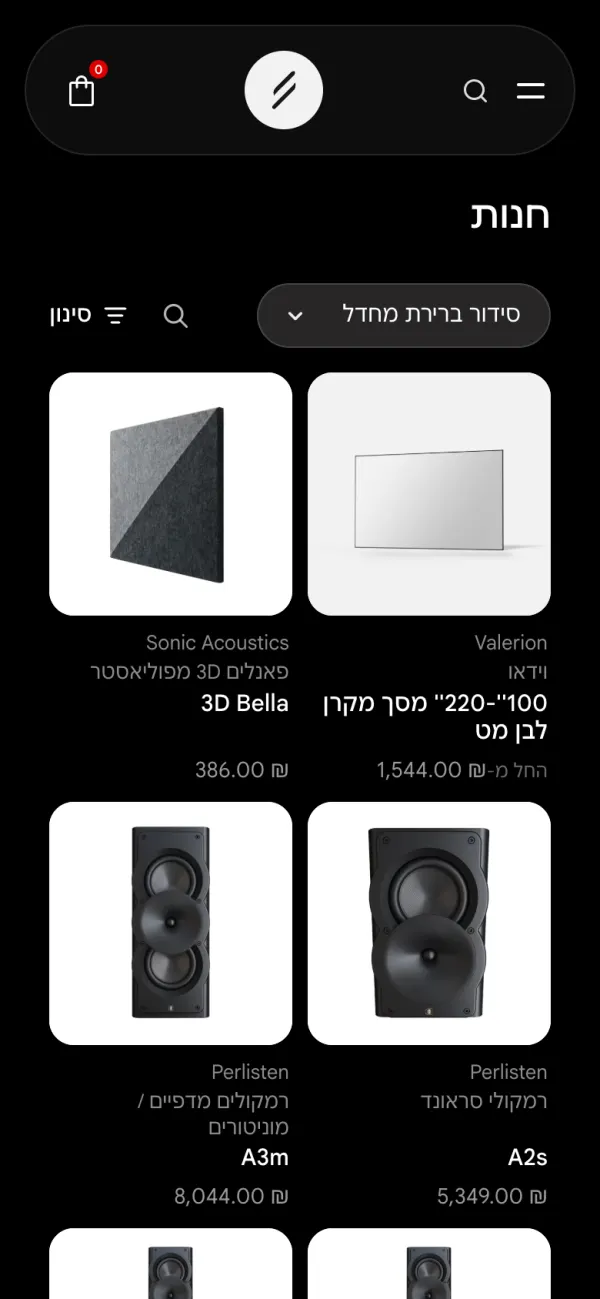
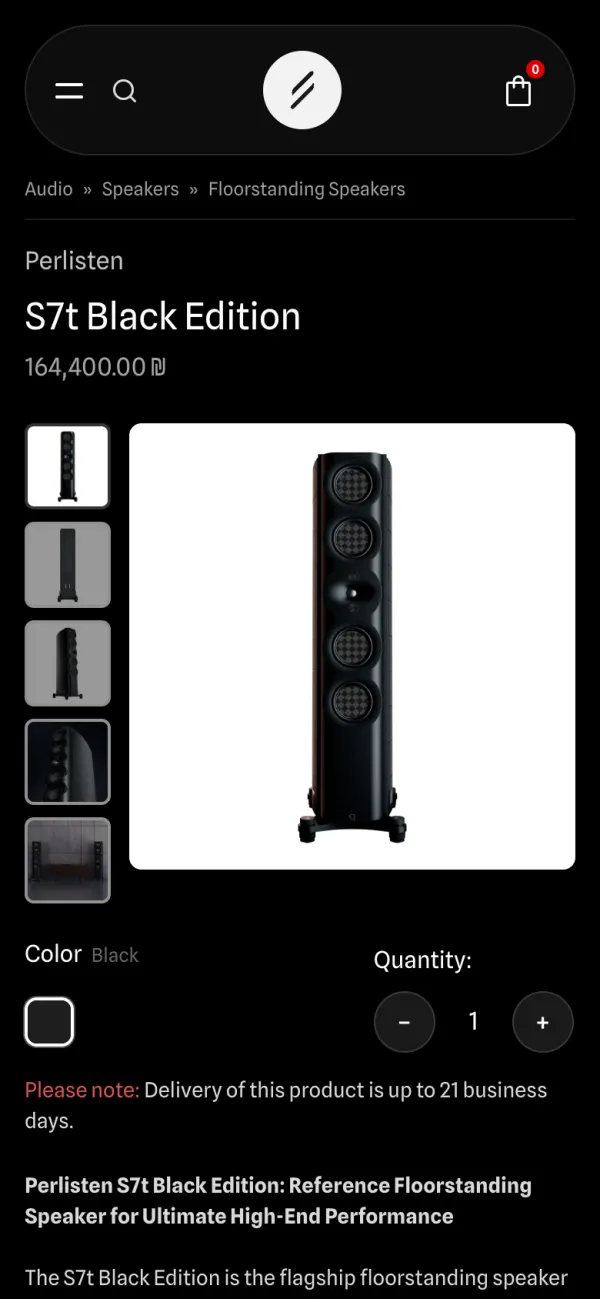
Most visitors arrive from social ads on a phone. The mobile store has its own slide-in menu with search, a two-column grid that loads ten products at a time, and brand pages with their own mobile video and scroll logic.

Performance
Four layers between a visitor and the database
Heavy pages only feel fast when most requests never reach PHP. Each layer catches what the one above it missed.
| Layer | What it holds | Detail |
|---|---|---|
| Cloudflare edge | Whole pages | Served over HTTP/3 from the nearest location |
| Page cache | Rendered HTML | Scripts deferred until the first interaction |
| Redis object cache | Filter counts and product cards | Keyed by language and customer role, cleared when a product is saved |
| Script diet | Shop and category pages | About a dozen plugin script groups are removed where they are not used |
| Media | Images and video | AVIF with responsive sizes, video from a CDN, product pages prefetched on hover |
What is next
What I would do next
Product pages do not yet publish Product structured data, so prices and availability cannot appear as rich results in search. That is the highest-value change left, and a small one.
Filtered pages are slower on their first uncached load than I would like. Moving the filter counts into a precomputed index would remove that.